
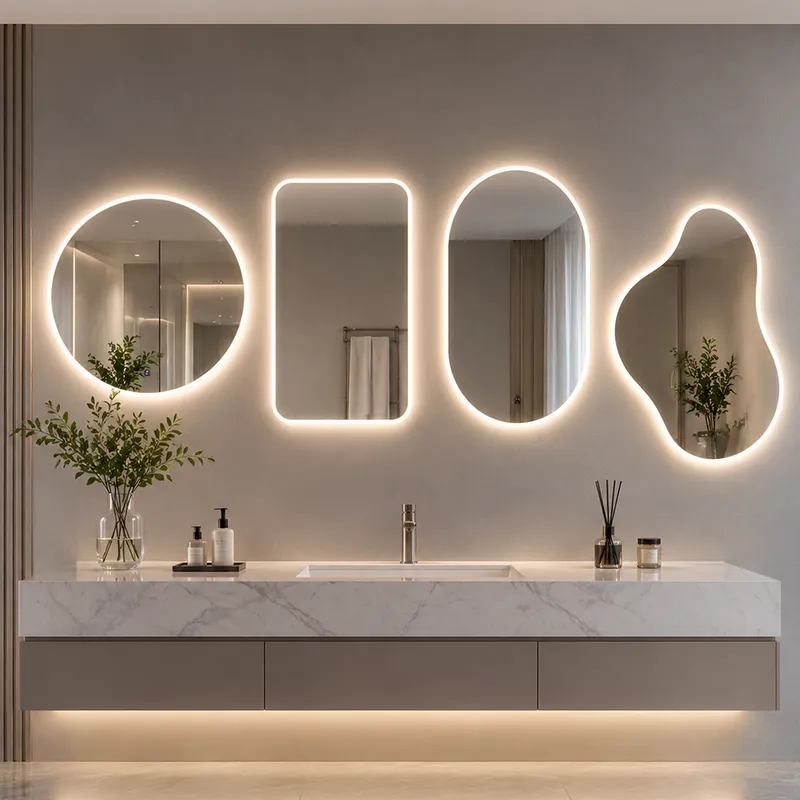
An LED mirror combines a reflective mirror surface with integrated LED lighting, offering both practical illumination and a modern appearance. Depending on its design and configuration, an LED mirror may feature frontlit or backlit lighting, adjustable colour temperature, dimming controls and additional smart functions.
For importers, wholesalers, retailers and project buyers, understanding how LED mirrors are constructed and what features are available is important when selecting products for different markets and applications.
In this guide, we explain the main components of LED mirrors, compare different lighting systems, explore smart functions and outline the key specifications buyers should consider before placing an order.
1. How Is an LED Mirror Made? Understanding Its Main Components
An LED mirror is made up of several components that work together to provide reflection, illumination and electrical functionality. Understanding these components helps buyers compare product specifications and evaluate different configurations.
Mirror Glass and Reflective Coatings
The mirror glass provides the reflective surface and plays an important role in the overall appearance and quality of the finished product.
Different glass substrates and reflective coating options can be used in mirror manufacturing. For example, ultra-clear glass has a lower iron content than standard clear glass, helping reduce the slight green tint that may be visible in ordinary glass.
Silver and aluminum are two common reflective coating options. Copper-free is a manufacturing characteristic associated with certain mirror coating processes, rather than a separate reflective metal. Therefore, buyers should distinguish between the glass substrate, reflective coating and coating process when comparing mirror specifications.
For a more detailed comparison, see our guide to Copper-Free Silver Mirrors vs. Aluminum Mirrors.
LED Lighting System
The LED lighting system provides illumination around or behind the mirror. Its configuration affects the lighting effect, brightness and overall appearance.
Common lighting components include LED strips, light-diffusing materials and supporting structures. Different LED layouts can create frontlit, backlit or combined lighting effects.
Electrical Components
Electrical components supply and control power for the LED lighting system. Depending on the product configuration, these may include:
- LED Driver: Converts the incoming power supply into the appropriate output for the LED lighting system.
- Switch or Sensor: Controls the mirror lighting through touch, hand-wave or other sensing methods.
- Connecting Wires: Connect the electrical components and lighting system.
- Additional Modules: Support optional functions such as dimming, colour temperature adjustment, anti-fog heating or Bluetooth connectivity.
For international buyers, the electrical configuration should be selected according to the voltage, frequency and applicable requirements of the destination market.
Frame and Mounting Structure
LED mirrors can be designed with or without an external frame. Framed models may use materials such as aluminum alloy, stainless steel or acrylic, depending on the product design.
The mounting structure also varies by product. Wall-mounted mirrors are common in bathrooms and commercial interiors, while full-length mirrors are designed for bedrooms, dressing areas, retail spaces and other applications requiring a full-body reflection.
2. How Do Different LED Mirror Lighting Systems Work?
LED mirrors are commonly classified by how their light is positioned and distributed. The three main configurations are frontlit, backlit and dual-lit.
Frontlit LED Mirrors
Frontlit LED mirrors have lighting positioned toward the front of the mirror, allowing light to illuminate the user and the surrounding area. This configuration is often selected for tasks that require more direct facial illumination, such as shaving, skincare and makeup application.
Backlit LED Mirrors
Backlit LED mirrors use lighting positioned behind the mirror. Light spreads onto the wall around the mirror, creating a soft ambient glow. This design is often chosen for decorative purposes and contemporary bathroom interiors.
Dual-Lit LED Mirrors
Dual-lit LED mirrors combine front-facing and rear-facing illumination. This configuration provides both direct lighting and ambient backlighting, making it suitable for buyers looking for a more distinctive lighting effect.
The actual lighting effect depends on the LED layout, light-diffusing structure, mirror design and installation environment.


For a more detailed explanation, read our guide to Frontlit vs. Backlit LED Mirrors.
3. What Types of LED Mirrors Are Available?
LED mirrors are available in different shapes, sizes and frame designs. Buyers can select products according to their target customers, installation requirements and market preferences.
By Shape and Design
Common LED mirror shapes include:
- Round LED Mirrors: A popular choice for modern bathrooms and decorative interiors.
- Rectangular LED Mirrors: A versatile design suitable for bathrooms, hotels and commercial projects.
- Oval LED Mirrors: Often used where a softer and more decorative appearance is preferred.
- Irregular-Shaped LED Mirrors: Designed with distinctive outlines for customers looking for more individual styles.
- Full-Length LED Mirrors: Designed for bedrooms, dressing rooms, retail spaces and other applications requiring a full-body reflection.
By Frame Construction
LED mirrors can also be grouped according to their frame construction:
- Frameless LED Mirrors: Feature a clean appearance without a prominent external frame.
- Metal-Framed LED Mirrors: Use materials such as aluminum alloy or stainless steel to create a defined frame around the mirror.
- Acrylic-Framed LED Mirrors: Use acrylic elements to create distinctive decorative shapes and lighting effects.
Frame design can influence the mirror’s visual style, dimensions and suitability for different interior environments.


4. Smart LED Mirrors: What Functions Can They Offer?
A Smart LED Mirror combines integrated LED lighting with additional electronic functions that improve convenience and user control. The available features depend on the model and selected configuration.
Touch and Sensor Controls
Different control systems are available for operating LED mirrors:
- Touch Sensor: Allows users to control lighting by touching a designated area on the mirror.
- Hand-Wave Sensor: Allows users to switch lighting on or off with a hand movement near the sensor.
- Human-Body Sensor: Can activate lighting when a person is detected within the sensor’s operating range, depending on the sensor design.
Dimmable Lighting and Adjustable Colour Temperature
Some Smart LED Mirrors support brightness adjustment, allowing users to control the lighting intensity according to their preferences and environment.
Adjustable colour temperature, also known as CCT adjustment, allows users to switch between different light tones. Common options include:
- 3000K: Warm white light.
- 4000K: Neutral white light.
- 6000K: Cool white light.
These options can be supplied as fixed colour temperatures or combined in models with adjustable CCT functionality.
Anti-Fog Function
An anti-fog LED mirror uses a heating element installed behind the mirror to reduce condensation on the designated heated area. This helps maintain a clearer reflective surface in humid bathroom environments.
The heated area and operating method may vary depending on the product design.
Bluetooth and Digital Displays
Additional functions may include Bluetooth speakers for audio playback and digital displays for information such as time and temperature.
These features can be selected according to the target market, product positioning and intended retail price range.
Not every LED mirror needs to include all these functions. Buyers can select the required features according to their target market, product positioning and budget. The final configuration should always be confirmed based on the specific model and product specifications.
5. Where Are LED Mirrors Used?
LED mirrors are used in both residential and commercial environments. Their lighting configurations, dimensions and optional functions can be selected to suit different applications.
Residential Bathrooms
LED bathroom mirrors are commonly installed above bathroom vanities. Frontlit and backlit designs can provide practical illumination while complementing modern bathroom interiors.
Hotels and Hospitality Projects
Hotels, serviced apartments and other hospitality projects may use LED mirrors in guest bathrooms and dressing areas. Buyers should consider consistent specifications, installation requirements and packaging when sourcing products for larger projects.
Salons and Barber Shops
LED mirrors with front-facing illumination can be suitable for salons and barber shops, where clear lighting around the face is important for daily grooming and styling tasks.
Bedrooms and Dressing Areas
Full-length mirrors are often used in bedrooms, dressing rooms and walk-in closets. LED lighting can add practical illumination and create a more distinctive appearance.
Retail and Commercial Interiors
LED mirrors can also be used in clothing stores, beauty shops and other commercial spaces where mirrors serve both functional and decorative purposes.

6. How Can Buyers Customize LED Mirror Products?
For importers, wholesalers, retailers and project buyers, customization helps match LED mirror products to specific market requirements and customer preferences.
Buyers can select from existing product designs and available configurations or provide their own drawings and specifications for OEM production.
Choosing Existing Designs and Configurations
Buyers can start with existing mirror designs and select suitable specifications, such as dimensions, lighting configurations, control methods and optional functions. This approach is useful when developing a product range without creating a completely new design.
OEM Customization
For OEM orders, buyers can provide drawings, reference images or detailed product requirements for production according to the agreed specifications.
Depending on the product model, customization options may include:
- Dimensions and Shapes: Standard sizes, custom dimensions and non-standard shapes.
- Mirror Type and Thickness: Different mirror glass options and thicknesses. Depending on the design and application, available thickness options may include 3mm, 4mm and 5mm.
- LED Lighting: Frontlit, backlit or dual-lit configurations, as well as colour temperature and brightness options.
- Functions: Touch controls, sensors, dimming, anti-fog, Bluetooth and digital displays.
- Frame Materials: Aluminum alloy, stainless steel or acrylic, depending on the product category and design.
- Frame Colours: Available finishes can be selected according to the product design and order requirements.
Not every option is available for every model. The final configuration should be confirmed according to the selected design and production requirements.
Learn more about our LED Mirror OEM Customization capabilities.
7. What Should B2B Buyers Check Before Ordering LED Mirrors?
Before placing a bulk order, buyers should evaluate more than the appearance and quoted price of an LED mirror. The following points can help reduce specification misunderstandings and sourcing risks.
Product Specifications and Lighting Performance
Confirm the mirror dimensions, shape, glass type, thickness, frame construction and lighting configuration. For the LED system, ask about colour temperature, brightness, colour rendering index (CRI) and whether dimming or CCT adjustment is supported.
These specifications help buyers compare products accurately and determine whether a model is suitable for their target market.
Electrical Specifications and Market Requirements
Check the input voltage, frequency, LED driver specifications, control system and applicable ingress protection rating. Buyers should also confirm which electrical and product compliance requirements apply in the destination market.
Do not assume that a component certificate automatically covers the complete assembled mirror. Where certification is required, clarify the certificate holder, covered component or finished product, applicable model and relevant test scope.
Samples, MOQ and Lead Time
Before confirming a bulk order, discuss sample availability, minimum order quantity and estimated production lead time with the supplier.
Sample evaluation can help buyers check the actual appearance, lighting effect, functions and packaging before proceeding with larger quantities.
Packaging and Transportation
LED mirrors contain glass and electrical components, so packaging should be suitable for the product dimensions, weight and transportation method.
For sea freight and container shipments, buyers should discuss protective materials, carton specifications, pallet requirements where applicable and container loading arrangements.
It is also useful to confirm whether the packaging has been designed for the expected transportation conditions and whether any special handling instructions are required.
Quality Inspection and After-Sales Support
Buyers should clarify how product specifications will be checked before shipment, what inspection arrangements are available and how product issues will be handled after delivery.
Warranty coverage should also be clearly defined. Buyers should clarify the warranty terms for the mirror glass, LED lighting system and electrical components before confirming an order, as different parts may have different coverage conditions.
8. LED Mirror Buyer Specification Checklist
Before requesting a quotation, buyers can prepare the following information to help suppliers understand their requirements and provide more accurate proposals.
- Product Type: LED bathroom mirror or full-length LED mirror.
- Dimensions and Shape: Required width, height, shape and installation orientation.
- Mirror Glass: Glass substrate, reflective coating and mirror thickness.
- Lighting Type: Frontlit, backlit or dual-lit.
- Lighting Specifications: Colour temperature, brightness, CRI and dimming requirements.
- Electrical Specifications: Input voltage, frequency, LED driver and control method.
- Protection and Compliance: Required IP rating and destination-market regulations.
- Additional Functions: Anti-fog, touch sensor, hand-wave sensor, human-body sensor, Bluetooth or digital display.
- Frame and Finish: Frame material, colour and surface finish, if applicable.
- Mounting Requirements: Required mounting method and installation details.
- Packaging: Standard packaging, logo printing or customized packaging requirements.
- Order Information: Estimated quantity, destination country and expected delivery schedule.
Providing these details at the quotation stage can make communication more efficient and help avoid unnecessary changes after production begins.
9. LED Mirror Manufacturing and Customization at YONGYUE
YONGYUE is an LED mirror manufacturer based in Xuchang, Henan, China. Our factory covers approximately 4,000 m² and has more than 100 employees, supporting the production and customization of LED bathroom mirrors and full-length mirrors.
Our manufacturing operations involve multiple stages, including glass cutting, edge grinding, laser processing, LED strip installation, electrical assembly, mirror assembly and final packing.
We supply different mirror designs and configurations for overseas importers, wholesalers, retailers and project buyers. Depending on the selected model, buyers can discuss customization options for dimensions, mirror types, lighting systems, functions and frame finishes.
Whether you are sourcing existing LED mirror designs or developing products according to your specifications, our team can discuss your requirements and provide product information for your project.

Explore our LED Mirror Collection or contact our team to discuss your sourcing requirements.
Frequently Asked Questions About LED Mirrors
What is the difference between a regular mirror and an LED mirror?
A regular mirror provides reflection without integrated lighting. An LED mirror combines a reflective surface with built-in LED lighting, providing additional illumination for bathrooms, dressing areas and other applications.
What is a Smart LED Mirror?
A Smart LED Mirror combines integrated LED lighting with additional electronic functions. Depending on the model, these may include touch or sensor controls, dimming, adjustable colour temperature, anti-fog heating, Bluetooth and digital displays.
Do all LED mirrors have an anti-fog function?
No. Anti-fog is an optional function on many LED mirror models. Buyers should confirm whether the selected model includes a heating element and check the heated area and control method.
What does CCT mean in LED mirrors?
CCT stands for Correlated Colour Temperature. It describes the colour appearance of the light, usually measured in Kelvin (K). Common LED mirror options include 3000K warm white, 4000K neutral white and 6000K cool white. Some models support switching between different colour temperatures.
What is CRI in LED mirror lighting?
CRI stands for Colour Rendering Index. It indicates how accurately a light source reveals the colours of objects compared with a reference light source. Buyers can compare CRI specifications when selecting LED mirrors for applications where colour appearance is important, such as grooming and makeup areas.
Can LED mirrors be customized for wholesale orders?
Yes. Depending on the model and production requirements, buyers can discuss customization of dimensions, shapes, mirror types, lighting configurations, functions, frame materials and colours.
What is the typical MOQ for LED mirrors?
MOQ depends on the product model, design and customization requirements. For many standard models, the MOQ can start from 50 pieces. Buyers should confirm the exact quantity with the supplier before placing an order.
Can I request a sample before placing a bulk order?
Sample arrangements can be discussed before bulk production. Buyers can use samples to evaluate the product appearance, lighting effect, functions and packaging.
How long does LED mirror production take?
Production lead time depends on the model, order quantity, customization requirements and factory schedule. Buyers should confirm the estimated production time with the supplier when discussing an order.
Are LED mirrors suitable for commercial projects?
Yes. LED mirrors can be used in hotels, apartments, salons, retail spaces and other commercial environments. Buyers should select suitable dimensions, lighting configurations, electrical specifications and installation methods for each project.
Final Thoughts
LED mirrors combine reflective glass, integrated lighting and optional electronic functions in a wide range of designs. Understanding their components, lighting configurations and available features helps buyers select products that match their target markets and applications.
For B2B sourcing, it is equally important to confirm product specifications, electrical requirements, customization details, packaging and after-sales arrangements before placing an order.
If you are looking for an LED mirror manufacturer for wholesale supply or OEM projects, explore our LED mirror products or contact YONGYUE to discuss your requirements.